- Innovators Uncensored
- Posts
- ⚡ How this Start-Up Helps a Generation Access Healthcare in Peace
⚡ How this Start-Up Helps a Generation Access Healthcare in Peace
Genius marketing hacks, Authentic Start-Up Stories, Fantastic Start-Up opportunities and so much more in this week's issue of Innovators Uncensored!

Richard Lee
April 10, 2026


Morning Innovators ⚡ In less than 5 minutes, we’ll cover…
🥳 The best funding opportunities, events and jobs in the Start-Up world this week
📰 This week’s biggest news stories in the Start-Up world
🏥 How this Start-Up helps a whole generation access healthcare information in peace
🍫 How stolen goods can turn into one of the greatest marketing campaigns ever
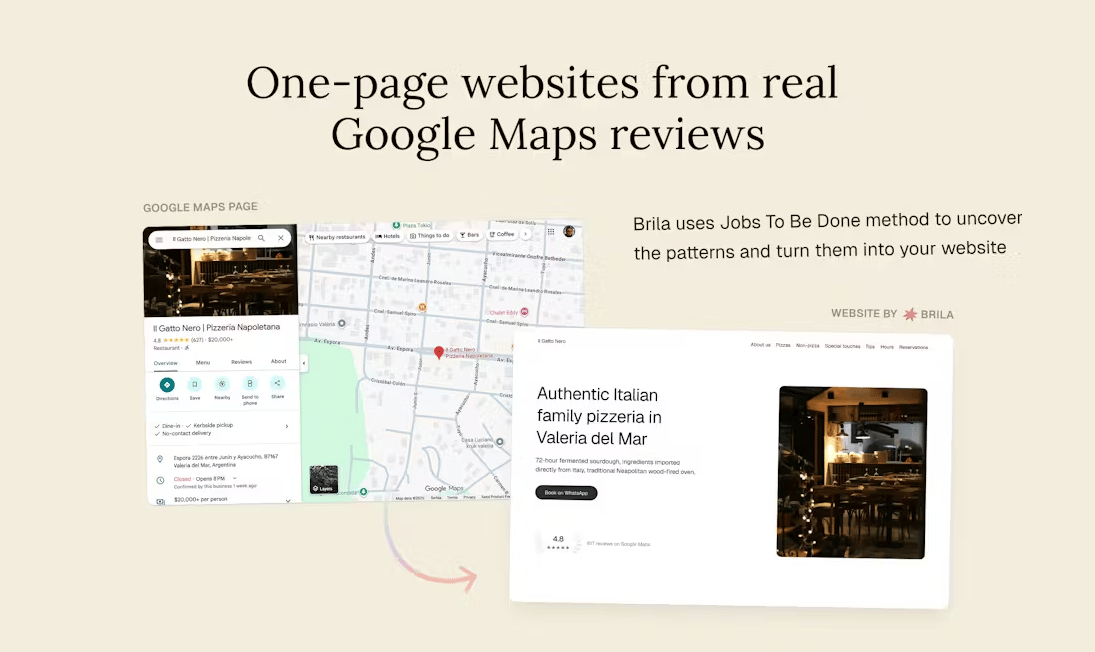
⭐️ A tool that will build you a one page website based on your Google reviews
✨ Last week’s most clicked link, was this link taking you through to Solid Bond who are looking to write cheques of up to £500k into Pre-Seed B2B tech companies/
Happy hustling,
Rich

🎤 Opportunities + Events
🛠 Perplexity have launched their ‘Billion Dollar Build’ competition, with winners receiving up to $1m in Seed Capital and $1m in compute - register here!
💥 Collide Capital have raised a $95m fund to back early-stage companies in FinTech, Supply Chain and future of work - pitch them here!
🏃 Momentous have just launched their new Pre-Seed fund backing companies building the infrastructure of human potential with €50k tickets - find out more here!

We now have a community of thousands of Start-Ups and Founders, here are the hottest Start-Up job opportunities from the Innovators Uncensored community on our very own Start-Ups Job Board!
💼 Start-Up Jobs

⏸ OpenAI pauses Stargate UK in blow to Nscale and government. Sifted
👋 Embattled startup Delve has ‘parted ways’ with Y Combinator. TechCrunch
🐄 Peter Thiel’s big bet on solar powered cow collars. TechCrunch
🤔 Entrepreneurship tax relief package comes into force. UKTN


Planning a trip for business or pleasure?
Final Rentals, a pioneering car rental fintech headquartered in Wales, has revolutionised the industry with its innovative approach and product-centric strategy. By addressing key challenges within the car rental sector, Finalrentals has experienced remarkable growth, increasing its size sixfold in the past 12 months. The company's expansion is not limited to growth metrics alone; it has also successfully established a robust global presence, extending its footprint across the EU and the Caribbean.
Book your rental here!


If you haven’t seen, 12 tonnes of KitKats were allegedly stolen from a KitKat truck transporting the goods from factory to shop recently.
Instead of KitKat being down and out about the missing KitKats, they’ve turned it into one of the most viral marketing campaigns ever. The absolute peak of it all? This KitKat lorry getting escorted through Toronto with armoured security vehicles surrounding it.
People all over the world have been following this story and loving every twist in the journey. So much so, it has racked up tens of millions of impressions across social media and has been picked up by every news channel in the world.
At this point, I’m not sure if the KitKats were actually stolen or if it was just made up to support this marketing campaign. The question is, what storyline could you create to build a winning marketing campaign like this?

Each week we highlight our favourite tools - either something we’ve been using in our businesses, or tools that our Start-Up community have recommended.
Website generators give you a template with made-up copy. You rewrite it for hours – still sounds generic. Brila does content first. It reads your Google Maps reviews, finds why customers actually choose you using Jobs to Be Done, and builds a one-page site from real patterns, real wording, real photos. When a business has enough reviews, the results often surprise even the owners. Not a single prompt – a serious AI system behind every website. Free plan gives you a fully generated site.


🌙 Luna: Helping the Next Generation Access Health Advice in Peace
For teenagers today, health information is everywhere, but clarity is not.
Between social media, online misinformation, and the awkwardness of asking adults difficult questions, many young people struggle to access advice they actually trust.
That’s the problem Luna was built to solve.
Luna is an AI-powered health companion designed specifically for teens, giving young people a safe, anonymous place to access reliable guidance on both mental and physical wellbeing. Built alongside doctors and educators, the platform offers judgment-free support on topics that many teenagers find difficult to discuss openly.
Its mission is simple but ambitious:
Help teens make better health decisions by giving them trustworthy information in a format they actually want to use.
At the same time, Luna aims to support parents by helping them raise healthier, more informed, and more confident young adults.
Built Around a Shared Mission
Luna’s Co-Founders, Jas and Jo, met while studying for their MBA at University of Oxford.
Coming from consulting backgrounds, they bonded over a shared frustration with how inaccessible and outdated health education often feels for teenagers.
Both believed that if young people were going to turn to technology for answers anyway, there should be a platform designed specifically to meet them where they are - safely, credibly, and in a tone they understand.
That alignment in mission became the foundation for Luna.
First Users: Grassroots and Manual
Luna’s earliest growth was highly manual.
Before worrying about scale, the founders focused on one thing:
Get in front of real users and learn.
They:
Reached out to personal contacts with teenage children
Conducted interviews with teens and parents
Ran workshops in schools
Introduced the product directly to students
It wasn’t scalable, but it gave them what mattered most in the early days:
Deep understanding of the customer.
This hands-on approach helped them build an initial user base of engaged early adopters while refining the product around real-world feedback.
The Breakthrough: Going Viral on TikTok
Luna’s inflection point came in early 2023 when the brand went viral on TikTok.
That moment transformed awareness overnight.
The viral traction didn’t just drive downloads, it fundamentally shaped the company’s growth strategy.
The team doubled down on a community-led social approach, recognising that teens trust peer recommendations far more than traditional advertising.
When young users began sharing Luna organically, growth accelerated rapidly.
It validated one of the most important dynamics in youth-focused consumer products:
If teens love something, they market it for you.
Product Development: Letting Users Lead
One of Luna’s biggest strengths has been its commitment to user-driven development.
Rather than assuming what teenagers wanted, the team built with them.
They listened closely to feedback from both teens and parents to shape:
Product features
Tone of voice
Brand identity
User experience
This proved especially important given the sensitivity of the category.
Health, wellbeing, and mental health can easily feel preachy, clinical, or uncool if handled poorly.
Luna’s challenge was making a product about traditionally “taboo” topics feel approachable, modern, and genuinely useful.
That only happened because the team stayed obsessively close to the user.
Looking back, one thing they would change:
They would have built referral loops earlier.
Seeing how powerful peer-to-peer recommendation became, the Founders now recognise that referral mechanisms could have accelerated growth even faster.
Funding the Vision
Luna was not bootstrapped.
The business has raised £1.4 million across two funding rounds, backed by a mix of:
Angel investors
Family offices
Early-stage VCs
The first round came primarily through personal networking, with subsequent rounds built on continued investor outreach and momentum.
Interestingly, the Founders view their MBA at Oxford not just as education, but as part of the startup’s foundation - the environment that created both the partnership and early network that helped get Luna off the ground.
The Hardest Challenge: Building Trust Around Sensitive Topics
One of Luna’s toughest challenges has been brand positioning.
Teen health is inherently delicate.
Talk too clinically, and teens disengage.
Talk too casually, and parents lose trust.
Miss the tone entirely, and neither audience adopts it.
Balancing those competing needs required constant iteration.
By involving both parents and teens in the process, Luna managed to build a brand that feels:
Safe enough for parents to trust
Cool enough for teens to use
Credible enough for both to value
That balancing act has been central to the company’s success.
Founder Lessons: Burnout Is Real
Beyond the business itself, one of the Founders’ most important learnings has been personal.
In the first year of building Luna, they pushed relentlessly.
By year two, burnout hit.
Like many Founders, they learned the hard way that intensity without sustainability eventually catches up with you.
That experience reshaped how they think about performance:
Long-term execution requires long-term energy.
Now, self-care and burnout prevention are viewed not as luxuries, but as necessary parts of building effectively.
Building the Health Platform Teens Actually Want
Luna sits at the intersection of several powerful trends:
AI-enabled consumer health
Growing mental health awareness
Teen digital-native behaviour
Demand for trusted information sources
But what makes it compelling is not just the timing.
It’s that the company has approached a difficult category with unusual discipline:
Deep user empathy
Community-led growth
Strong trust architecture
Clear mission alignment
If Luna continues executing well, it has the potential to become more than just an app.
It could become the default health companion for a generation growing up online.

Next week I’ll be highlighting another awesome Start-Up, as well as sharing all the usuals including funding opportunities, Start-Up news, plus plenty of awesome tips, tricks and tools.
P.S. Connect with me on LinkedIn…
